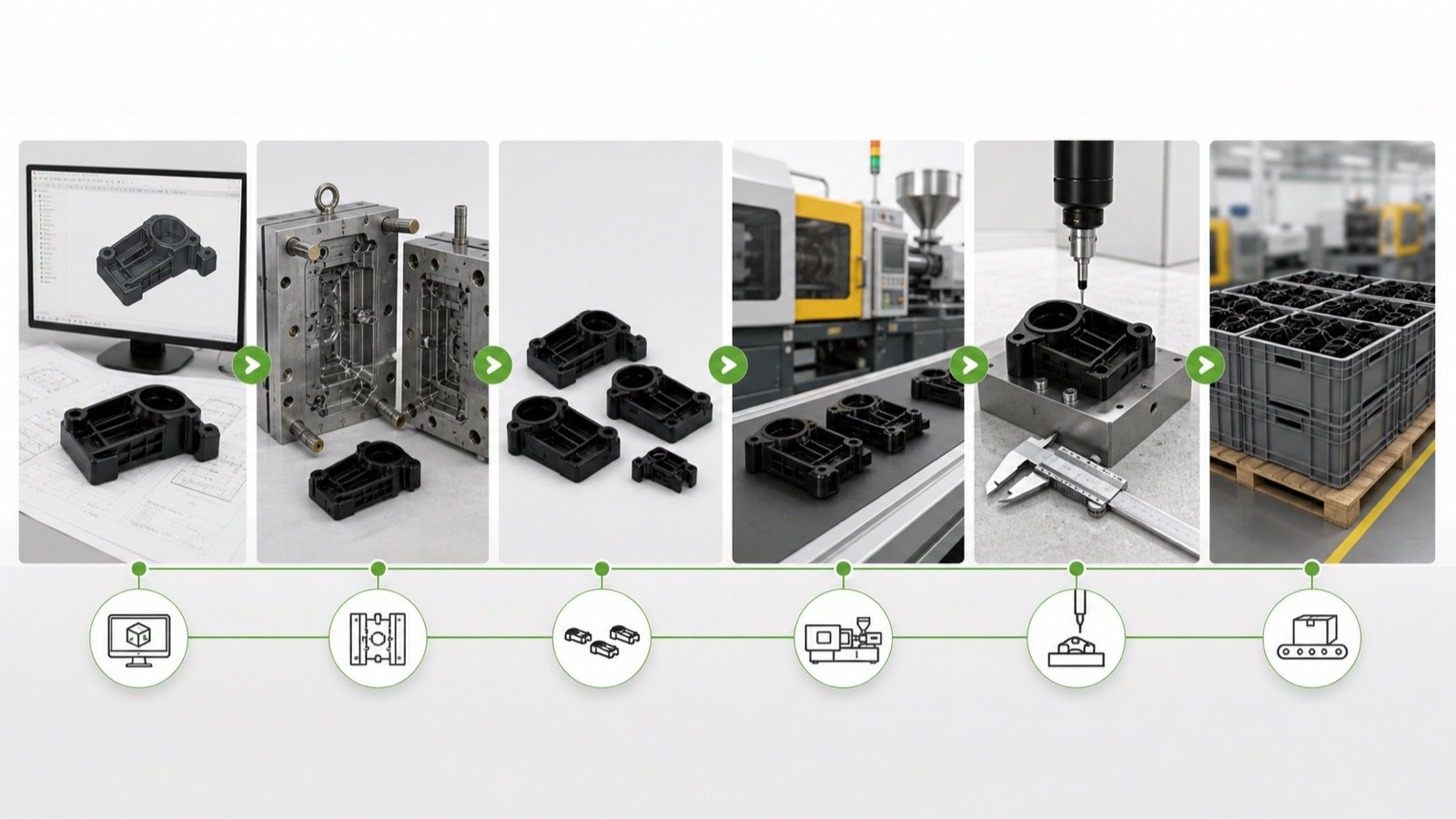
An invention-to-manufacturing consultant helps convert a product idea or working prototype into a controlled production plan. The work connects product requirements, DFM, supplier selection, tooling, quality control, cost, schedule, and sales assumptions. It is most valuable before a founder commits to a mold, factory, large purchase order, or funding plan based on incomplete manufacturing evidence.
Who this service is for
- Inventors with a concept, CAD model, or prototype who do not know the next manufacturing step.
- Hardware startups preparing for DFM, tooling, pilot production, or an investor milestone.
- Consumer-product companies comparing factories or correcting a delayed, over-budget project.
- International buyers who need independent coordination with plastic, metal, assembly, and packaging suppliers in China.
- Teams whose prototype works but whose cost, quality, certification, or production yield is still uncertain.
What an invention-to-manufacturing consultant should do
Define the manufacturing version
The first task is to establish which product version is being manufactured. Features, performance, appearance, materials, interfaces, expected life, target cost, annual volume, compliance markets, and packaging requirements must be explicit. Tooling a moving design creates expensive rework.
Review design for manufacturing and assembly
The review should cover plastic wall thickness, ribs, bosses, clips, undercuts, parting lines, draft, tolerances, metal processes, fasteners, assembly sequence, serviceability, cosmetic surfaces, and inspection points. DFM is not only a factory comment sheet; it is a decision about function, process capability, cost, and acceptable risk.
Build a supplier-ready RFQ package
Factories need consistent information to provide comparable quotations. A useful package includes drawings, 3D files, BOM, materials, finish, tolerances, annual and order quantities, quality criteria, certification needs, packaging, tooling ownership, sample stages, and commercial terms. Quotations based on different assumptions cannot be compared by price alone.
Evaluate factories and tooling proposals
Supplier evaluation should examine similar product experience, process ownership, engineering response, quality systems, capacity, subcontracting, financial stability, export capability, and corrective-action behavior. Tooling reviews should clarify steel, mold base, cavity count, hot or cold runner, gate, ejection, texture, expected life, spare parts, trial stages, and who owns the tool.
Plan prototype, tooling, and validation gates
Each build must answer defined questions. Engineering prototypes validate function; appearance prototypes validate form and user response; T0 and T1 samples expose tooling and molding issues; pilot production tests the complete production route. A consultant should define acceptance criteria and the decision required at each gate.
Prepare quality control and production launch
Before mass production, the team needs approved samples, critical-to-quality dimensions, incoming inspection, process checks, functional tests, cosmetic standards, packaging tests, AQL or other sampling rules, traceability, and a process for handling defects. Quality cannot be added after the purchase order is placed.
Typical deliverables
| Stage | Deliverable | Decision enabled |
|---|---|---|
| Readiness | Risk register and missing-information list | Proceed, redesign, or gather evidence |
| DFM | Manufacturability findings and action owners | Freeze design for quotation or tooling |
| RFQ | Supplier-ready quotation package | Compare factories on equal assumptions |
| Supplier selection | Capability and commercial comparison | Nominate supplier and negotiate terms |
| Tooling | Tool specification and trial plan | Approve deposit and control tool changes |
| Pilot production | Build plan, quality criteria, and issue log | Approve mass production or corrective action |
| Commercial launch | Landed-cost and delivery-risk review | Confirm price, margin, inventory, and channel plan |
A practical engagement process
- Initial evidence review: product brief, drawings, prototype, BOM, supplier quotes, target market, budget, timeline, and current blockers.
- Readiness diagnosis: identify the decisions that can be made now and the assumptions that need testing.
- Priority work plan: sequence engineering, DFM, sourcing, tooling, quality, certification, sales, and funding activities.
- Execution support: review supplier responses, samples, tooling changes, pilot results, and commercial tradeoffs.
- Decision gates: document whether to proceed, renegotiate, redesign, delay, or stop.
When to hire this role
Engage before requesting serious factory quotations if the specification is incomplete; before paying a tooling deposit if DFM and ownership terms are unclear; before pilot production if inspection standards are missing; or before fundraising if the use of funds is not tied to a measurable manufacturing milestone.
The role can also help when a project is already in difficulty: repeated sample failures, unexplained tooling changes, unstable quality, missed delivery, rising cost, low yield, or disagreement between the design team and factory.
How this differs from a sourcing agent
A sourcing agent usually focuses on finding suppliers, obtaining quotations, and coordinating orders. An invention-to-manufacturing consultant starts with product and business decisions, may recommend delaying sourcing, and should be able to challenge the design, cost model, validation plan, and commercial assumptions. Some providers perform both roles, but compensation and supplier relationships should be disclosed.
How this differs from an engineering firm
An engineering firm creates technical designs and prototypes. A manufacturing consultant may not replace specialist mechanical, electronics, firmware, compliance, or laboratory work. The consultant coordinates what evidence those specialists must produce and connects it to factory execution, quality, sales economics, and capital timing.
Why work with Mountain Xie
Mountain Xie brings 30+ years of experience spanning product management, project management, design coordination, mold tooling, plastic and metal manufacturing, production management, quality control, export sales, company operations, and investment decisions. The perspective is practical: identify where the project can lose time or capital, make the next decision explicit, and match specialist resources to the actual stage.
Support can include an independent readiness review, DFM and quotation review, supplier comparison, tooling and trial checkpoints, pilot-production planning, export-sales economics, or manufacturing evidence for investors.
Information to send for an initial review
- Product summary and intended customer.
- Sketches, CAD, drawings, photos, or prototype video.
- Known materials, components, and manufacturing processes.
- Target selling price, target factory cost, and expected quantities.
- Target countries, certifications, packaging, and launch channel.
- Supplier quotations or sample feedback already received.
- Budget, timeline, and the decision causing the most uncertainty.
What an invention to manufacturing consultant should control
An invention to manufacturing consultant connects product intent to a repeatable factory system. The work begins before supplier quotation and continues through requirements, validation, DFM, tooling, samples, pilot production, quality release and the commercial assumptions that determine whether production makes business sense.
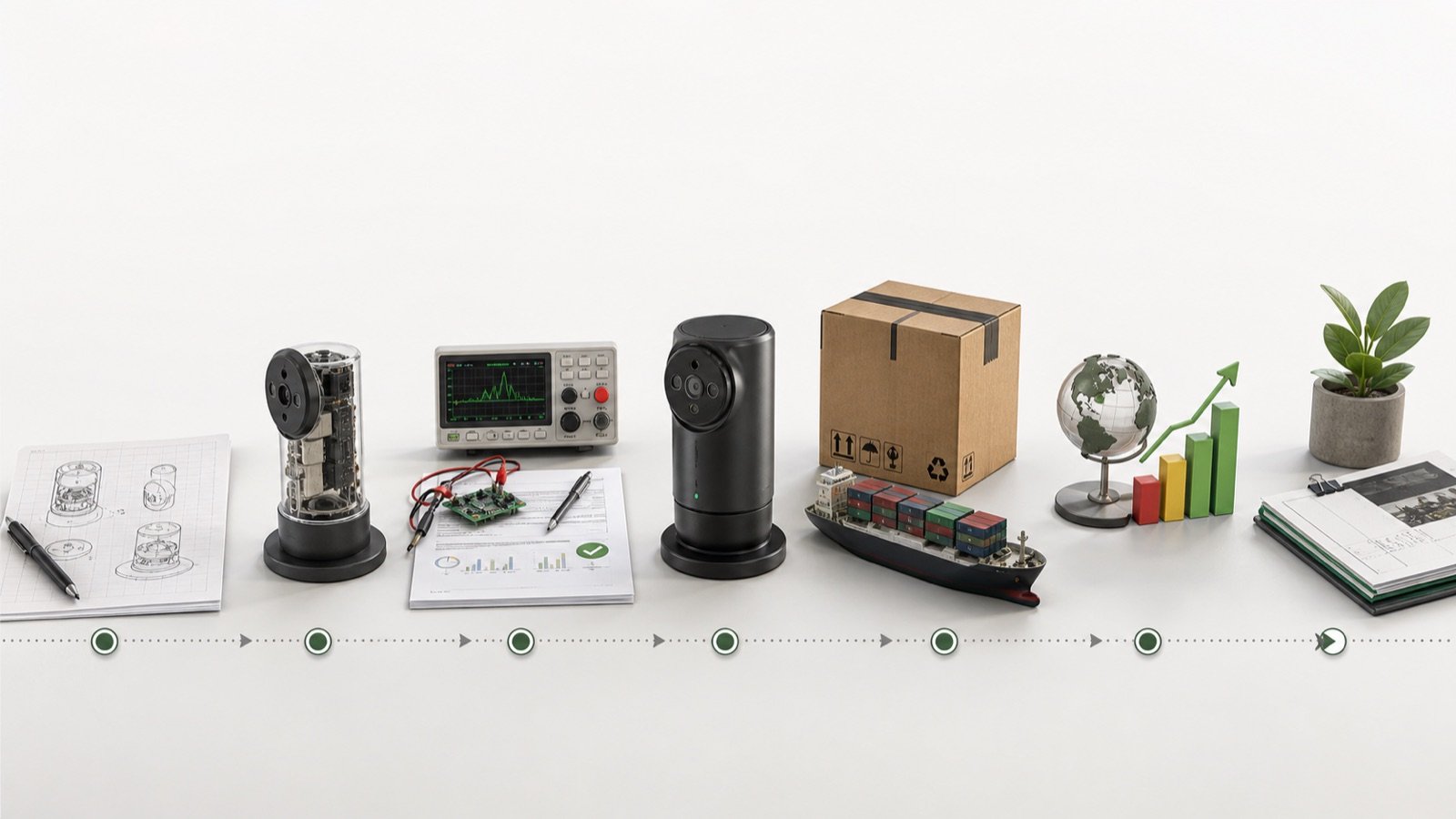
Six controls to review before the next commitment
1. Turn the invention into controlled requirements
Define the user, environment, functions, interfaces, target cost, appearance, compliance and expected volume. Separate essential performance from optional features. An invention to manufacturing consultant should make ambiguity visible before designers and suppliers convert different interpretations into incompatible files and quotations.
2. Choose a production architecture
Review materials, components, electronics, assembly, tooling and test strategy together. Compare alternative processes using volume, tolerance, cosmetic expectations, service and capital. The goal is not to choose the most sophisticated process; it is to choose a route that can meet the customer promise with controllable variation and realistic investment.
3. Build evidence before tooling
Use prototypes and tests to close the highest-cost technical assumptions. Record failures, changes and remaining limitations. An invention to manufacturing consultant should distinguish an appearance model, a functional prototype and a production-intent unit so that prototype success is not misrepresented as factory readiness.
4. Prepare a comparable supplier package
Issue the same controlled CAD, drawings, BOM, materials, finish, annual volume, quality, test, packaging and schedule assumptions to each supplier. Normalize exclusions and commercial terms. Comparable inputs are necessary for comparable quotes; otherwise supplier selection rewards confidence and low headline pricing rather than actual scope.
5. Control tooling and sample corrections
Review DFM, tool concept, parting, gating, ejection, tolerance stack and cosmetic standards before release. During T0 and T1, separate design, steel, process, material and measurement causes. An invention to manufacturing consultant should maintain one correction log with owners, due dates and evidence required for closure.
6. Prove the production and business system
Use a pilot build to test operators, fixtures, work instructions, inspection, cycle time, yield, packaging and traceability. Connect the result to landed cost, delivery promises, warranty and working capital. Stable production is not only a factory result; it is the foundation for a credible launch and reorder plan.
What a useful engagement should deliver
A useful invention to manufacturing consultant engagement should create documents that the founder, engineering team, supplier and commercial team can use after the meeting. The following outputs keep decisions visible and reduce repeated interpretation:
- Requirements And Scope Baseline: dated, owned and linked to the current product or commercial revision.
- Production Architecture Decision: dated, owned and linked to the current product or commercial revision.
- Validation Evidence Plan: dated, owned and linked to the current product or commercial revision.
- Supplier Rfq Package: dated, owned and linked to the current product or commercial revision.
- Tooling And Sample Issue Log: dated, owned and linked to the current product or commercial revision.
- Pilot Release Recommendation: dated, owned and linked to the current product or commercial revision.
These outputs should be concise enough to maintain. The purpose of the invention to manufacturing consultant work is not to produce a large report; it is to make the next expensive decision traceable. When an assumption changes, the team should be able to identify which approval, quotation, test or sales commitment must be reviewed again.
Practical scenario
A prototype enclosure may be CNC machined, hand finished and assembled by the designer. A supplier can quote an injection mold, but that quote does not prove draft, gating, texture, assembly tolerance or inspection. The consultant first converts the prototype learning into production files and acceptance criteria, then uses supplier DFM and sample evidence to control the transition.
In this situation, the invention to manufacturing consultant process creates a controlled sequence. The team closes the highest-cost uncertainty first, updates the product and commercial evidence, and only then authorizes the next commitment. That sequence may feel slower for a few days, but it is usually faster than correcting a mold, replacing inventory or rebuilding buyer trust.
Putting the framework into operation
Start the invention to manufacturing consultant work with a single shared folder and a dated index of the files under review. Identify the current product revision, quotation revision and commercial assumptions at the top of the index. This small discipline prevents the discussion from drifting between old drawings, informal supplier messages and later cost estimates. It also makes the final recommendation reproducible for a team member who was not in the meeting.
Review the six controls in order, but do not give every item equal weight. Use the first pass to identify the two or three findings that can change the next commitment. A invention to manufacturing consultant should explain why those findings matter in money, schedule, customer impact or loss of flexibility. Lower-priority improvements can remain in the action register without blocking the gate.
For each major finding, attach one evidence request. The request may be a revised drawing, supplier DFM response, measured test result, buyer confirmation, cost quotation or pilot-build record. Define who will judge that evidence and what result is sufficient. This prevents a vague action such as check with the factory from remaining open across several meetings.
Close the review with a written decision and a short validity statement. For example, the conclusion may remain valid only for the current material, annual volume, supplier, target market and product revision. If one of those assumptions changes, reopen the relevant section of the invention to manufacturing consultant instead of assuming the previous approval still applies.
A focused review agenda
A productive invention to manufacturing consultant session can begin with ten minutes on the decision and current evidence, followed by thirty minutes on the highest-risk controls. Use the next twenty minutes to compare options and consequences, not to debate preferences. Reserve fifteen minutes for owners, dates and acceptance criteria, then finish by reading the decision statement aloud. If the team cannot agree on the statement, the evidence or authority is still incomplete.
Invite only people who own evidence or consequences: the founder or product owner, relevant engineering lead, manufacturing or quality representative, and the commercial owner when price or delivery is affected. Suppliers can contribute process facts, but approval authority should remain clear. A invention to manufacturing consultant becomes slow when attendance is broad but ownership is vague.
Warning signs that the project is not ready
- The team cannot identify one controlled product revision.
- A supplier quote is treated as complete even though tooling, fixtures, testing or correction rounds are undefined.
- Prototype success depends on hand fitting, expert adjustment or temporary components that are absent from the production plan.
- Sales price and delivery promises were made before landed cost, certification and capacity were checked.
- Open risks have no owner, evidence requirement or date.
- The next payment is scheduled by calendar rather than by an accepted technical or commercial result.
One warning sign does not automatically stop the project. It changes the decision from unconditional approval to a controlled action. The invention to manufacturing consultant should make that distinction visible so the team can keep momentum without hiding risk.
How to prepare for a review
Send the current product brief, CAD or drawings, BOM, prototype evidence, supplier quotations, target market, expected volume, price assumptions, schedule and the decision you need to make. Mark files that are provisional. A invention to manufacturing consultant can give a more useful answer when facts, estimates and aspirations are clearly separated.
Do not wait for every file to be perfect. An early review can identify which missing evidence actually matters. The review should end with a ranked action list, named owners and a clear condition for moving forward. That is more valuable than a general recommendation to continue development.
Related next steps
- Review the full invention-to-manufacturing path
- Assess DFM and manufacturing readiness
- Compare the types of support available to inventors
- Request a Hardware Product Readiness Review
A invention to manufacturing consultant should keep the current decision, evidence and owner visible.
FAQ
Can a consultant find a manufacturer for my invention?
Yes, after the product and RFQ package are sufficiently defined. Searching too early produces quotations based on guesses and makes supplier comparisons unreliable.
Do I need a finished prototype before consulting a manufacturer?
Not always. Early manufacturing input can prevent avoidable design decisions, but the purpose and limitations of the prototype must be clear before tooling or production commitments.
How much does it cost to manufacture an invention?
Cost depends on design, materials, processes, tooling, quantities, quality requirements, certification, packaging, logistics, and supplier terms. A credible estimate requires a defined product and volume scenario.
Can the consultant manage China manufacturing?
Support can cover supplier evaluation, RFQ comparison, tooling checkpoints, sample review, quality planning, production follow-up, and export considerations. The scope should define who approves technical changes and purchase commitments.
Will a consultant invest in the product?
Advisory and investment are separate decisions. A product becomes more investable when customer, technical, manufacturing, margin, and execution evidence are organized around clear milestones.