Where I am writing this from
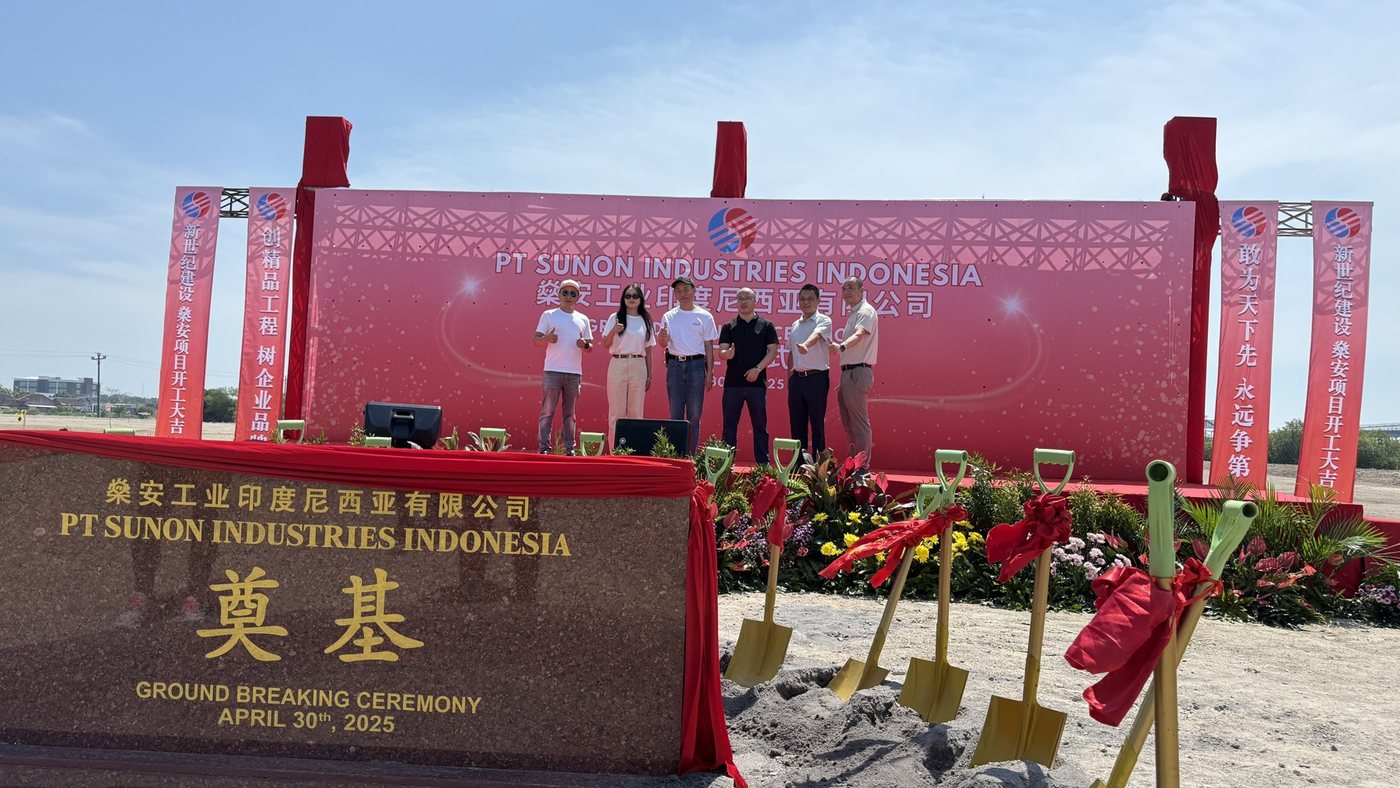
I am building one. In 2024 we bought roughly twenty thousand square metres in Semarang, Indonesia, and established PT SunOn Industries Indonesia. We broke ground on 30 April 2025. As of September 2026 construction is in its final stage, with handover expected before year-end. I am responsible for the project from land acquisition through construction to production and operations, and I am on site at least one week a month.
So this page is not a market overview. It is what the exercise looks like from inside it, while it is still unfinished.
Why the arithmetic disappoints
A China+1 decision is usually justified on landed cost: the tariff line goes away, the labour rate is lower, the unit price comes down. That comparison is correct and incomplete, because it prices the part and ignores the transfer.
I have watched a supplier change made to save eighty cents a part end up costing a hundred and thirty-four thousand dollars — and that was a move within China, between two factories speaking the same language, with the same die. Crossing a border does not make the same problem smaller.
What transfers with a die is the geometry. What stays behind is the process window that made it work.
Machine tonnage, shot profile, die temperature, alloy chemistry, operator habit — none of it moves in the container. The parts come out dimensionally similar and behave differently. Porosity appears in castings that never had it. A finish that passed for four years starts failing adhesion. Every one of those is discovered by someone, months later, usually by your customer.
The $134,000 supplier switch, in detail →
What the work actually consists of
Four things have to happen, and none of them is buying a building.
1 · Decide what is being duplicated, not what is being moved
Moving production means one site. Dual sourcing means two sites producing to one specification. These need completely different contracts, tooling budgets and inspection plans, and brands routinely start the first while describing it as the second. Decide which one you are doing before anyone quotes.
2 · Write down the process window, not just the drawing
The drawing travels well. The knowledge that makes the drawing producible usually lives in two or three people at your existing supplier and has never been written down. Capturing it — parameters, known failure modes, what the current factory does that is not on any document — is the single highest-return week in the whole project, and the one nobody budgets.
3 · Agree the acceptance criterion before first articles
A second source will produce a first-article report with deviations. Some of them matter and most do not. If the criterion is agreed beforehand — which dimensions are functional, measured from which datums — the review takes a day. If it is not, you get a hundred non-conformances on a part that assembles perfectly and a month of argument about whose measurement is right.
Why every part can pass and nothing fits →
4 · Run both, on real volume, before you shift
Qualification data from a sample run tells you the site can make the part once. It does not tell you the yield at speed, which is the number the business case depends on. Keep the Chinese source running and compare real production data across both. It costs more for two or three quarters. It costs very much less than discovering the difference after you have moved the volume.
Who does this inside your company today?
That is the actual question, and it is usually the reason the project stalls rather than fails. The tariff analysis is done by finance. The site visit is done by whoever was travelling. The qualification is done by an engineer who already has a full job and is twelve time zones from both factories.
China+1 does not fail on strategy. It fails because it is nobody's day job.
That is the thing I do. Not the building — the department that runs both sides of it: supplier management across the whole bill of materials, inspection at both sites against one standard, the correction loops, and the decision of when the second source is actually ready.
What a monthly retainer covers, and what it costs →
An honest position on timing
What is available today is the part that has to happen first anyway — deciding what you are duplicating, writing down the process window, and setting the acceptance criteria. That work is worth doing regardless of which country you land in, and it does not depend on my plant.