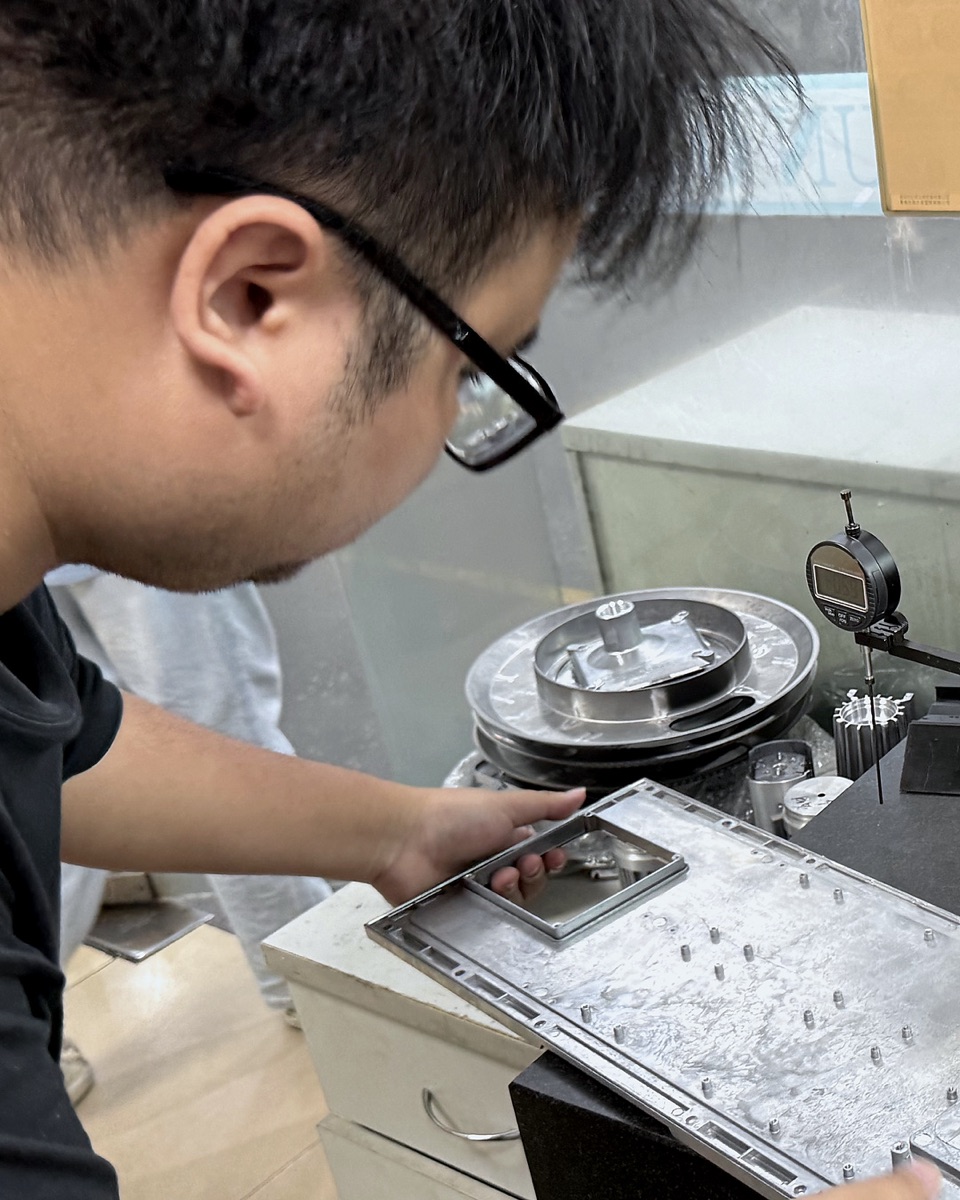
A founder switched die casting suppliers to save $0.80 per part.
It cost him $134,000.
The part was already in production and running well. Another factory quoted lower on the same drawing, the tool was movable, and on a spreadsheet the decision looked obvious: same part, same steel, less money per unit.
The parts that came back measured correctly. They looked correct. They failed anyway — porosity in the wall, invisible from the outside, surfacing only once parts were machined and put under load.
What transfers with a tool — and what doesn't
This is the misconception that makes supplier transfers dangerous: people believe the tool is the part.
The tool defines geometry. Quality is produced by the tool and the process together. What stays behind in the original factory is everything in the second column:
| Moves with the steel | Stays in the old factory |
|---|---|
| Cavity and core geometry | Machine tonnage and platen fit |
| Parting line, gates, runners | Shot profile and fill velocity |
| Ejection layout | Die temperature control and cooling setup |
| Surface finish and texture | Metal temperature and holding practice |
| Nominal dimensions | Cycle time, spray and lubrication routine |
| Vacuum setup, if the part uses one | |
| The actual alloy chemistry being melted | |
| The operator who knows this tool's quirks |
A tool moved without its process isn't a proven part in a new building. It's a new process on known geometry — and it needs requalifying as such.
Why porosity is the defect that catches people
Porosity has two main sources in die casting: gas trapped during a fill that happens in well under a second, and shrinkage as thicker sections solidify last and pull on the liquid still around them.
Both are governed by process conditions more than by geometry. A different machine, a slightly faster cycle, a cooler die, a different shot profile — any of these can move a part from sound to porous with no change to the steel at all.
And unlike a dimension, you can't see it. A porous part passes visual inspection. It passes dimensional inspection. It arrives, gets machined — and the cut face opens into voids. Or it's fine through assembly and fails later under pressure, plating, or load.
That's the trap: the inspection that would have caught it isn't the inspection anyone was running. Calipers measure the outside of a wall. Porosity lives inside it.
Doing the arithmetic properly
$0.80 a part is a real saving. On 50,000 parts a year it's $40,000 — a serious number, and exactly why the decision looked sensible.
What wasn't on the sheet:
- Scrapped parts from the qualifying batch that wasn't treated as a qualifying batch
- Rework and sorting labour on what could be saved
- Line downtime while replacement parts were made
- Air freight to recover schedule
- Engineering time diagnosing a defect nobody expected
- Moving the tool back, and re-establishing the original process
The correct comparison was never "$0.80 versus zero." It was "$0.80 per part versus the cost of one bad run" — and one bad run erases several years of that saving.
This doesn't mean never switch. It means price the switch honestly, including the qualification you'd have to do to make it safe.
How to transfer a tool properly
If the saving survives an honest calculation, treat the move as a new process qualification:
- Get the process parameters, not just the tool. Shot profile, die temperatures, cycle time, alloy spec, spray routine. Ask the incumbent. A professional supplier will usually provide them; reluctance is itself information.
- Send the full acceptance criteria. Including whatever internal-quality requirement exists — porosity limits, pressure test, X-ray or section criteria. If that was never written down, write it down now. This is the step that was missing in this case.
- Run trial shots and inspect them properly. Not just dimensions. Cut sections, or X-ray, if the part is structural, sealed or pressure-bearing.
- Run a pilot batch before committing volume. A few hundred parts through the real process, at real cycle time, inspected against the real criteria.
- Keep the incumbent running until the new source passes. Dual running for one cycle costs a little. Having no working source costs a launch.
Every stage in that list exists to catch what the previous stage missed. Skipping straight from "cheaper quote" to "production volume" is skipping all of them at once — and you pay for the missing steps at full production price.
The judgement underneath
The founder in this story wasn't careless. He did what a good operator is supposed to do: he found a lower price on an identical specification and acted on it.
The mistake was treating an identical drawing as an identical product. In casting, the drawing is the smaller half of what determines whether a part works.
Which is also why the cheapest quote deserves a second look rather than a fast yes. A factory quoting a proven part significantly below the incumbent is telling you something about how it intends to run the job — faster cycle, different machine, different alloy source, less inspection. Sometimes that's genuine efficiency. Sometimes it's the difference showing up in your parts.
The question worth asking a new caster isn't "can you make this cheaper." It's "what will you run differently from my current supplier?" The answer is the actual risk assessment.
Before you move a tool
The supplier due-diligence questionnaire I send with every RFQ — the one that makes a factory show its hand before you commit — is in the free China Manufacturing Starter Kit, along with factory screening questions, how to read a mold quote, the tolerances that only fail in the field, and the contract clause that keeps the tool yours.
If you're weighing a supplier move right now, bring the numbers to a free 15-minute call. Fifteen minutes of arithmetic beforehand is cheaper than every alternative.