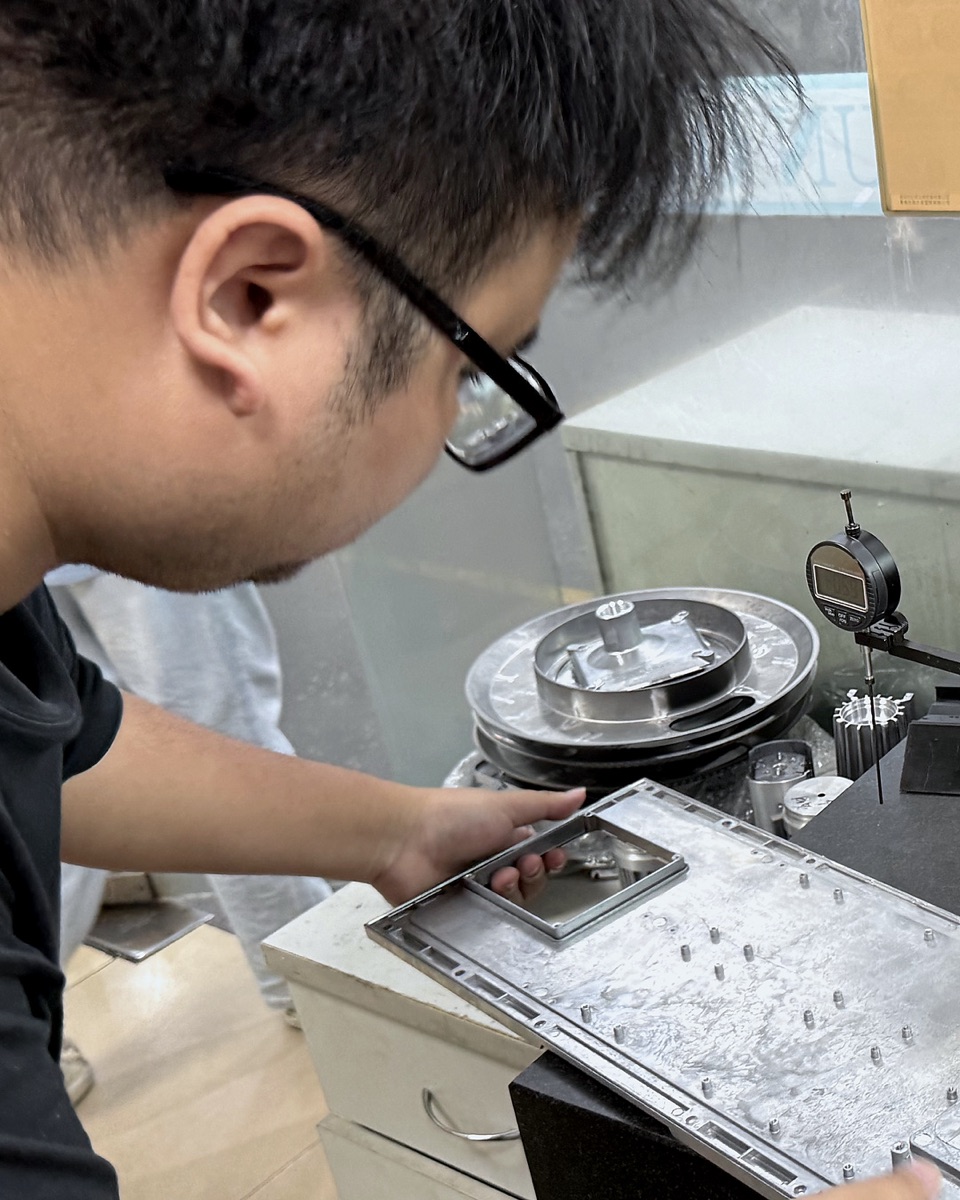
I own mold making, injection molding and die casting factories in the Pearl River Delta. Over thirty years my plants have been audited by European and American brands more times than I can count — by their staff, by SGS, by TÜV, by Bureau Veritas, by consultants nobody had heard of.
Here is what that taught me: most audits check whether a factory can prepare for an audit.
We know when you are coming. We know which line you will be shown. We know which binder to put on the table. None of that is dishonest — it is what any organisation does when it is being assessed. But it means a checklist built from published standards will mostly confirm that we are good at being assessed.
The checks below are the ones that are hard to prepare for. Where a question is easy to game, I have said so.
Phase 1 · Before you travel (documents)
Send this list two weeks ahead. How fast it comes back, and how complete it is, is itself a data point — a factory with its house in order sends most of this within 48 hours.
- Business licence (营业执照) — legal entity name, registered capital, scope of business, year established Insider: Cross-check the name against the quotation letterhead and the bank account you will be asked to pay. A mismatch is the single most common misrepresentation in Chinese sourcing — a trading company presenting a partner's plant as its own.
- ISO 9001 (and IATF 16949 / ISO 13485 if relevant) — with the scope page Insider: Everyone sends the certificate. Almost nobody sends the scope page, which states which processes and which site are actually covered. Ask specifically for it.
- Equipment list — machine type, tonnage, brand, year of manufacture, quantity
- Recent third-party inspection or audit report (any client, redacted is fine) Insider: A refusal here is usually confidentiality, not concealment. But a factory that has never had a third-party audit has never had a customer who required one.
- Two or three customer references in your industry or a comparable one
- Organisation chart with headcount by function (engineering / QC / production) Insider: The ratio matters more than the total. A 200-person plant with three QC staff and no process engineer will build what you drew and nothing more.
- Export licence and experience shipping to your market
- Insurance certificate (product liability), if your product needs it
Phase 2 · The walk-through
Walk the process in production order — incoming material, storage, primary process, secondary operations, inspection, packing, shipping. Not the route your guide prefers.
- Incoming material area: are lots identified, segregated, and is there evidence of incoming inspection? Insider: Material traceability is the hardest thing to fake because it has to be continuous. Pick one finished part and ask them to trace the material lot back. The time it takes tells you everything.
- Machines actually running — count them against the equipment list you were sent
- Machine condition: leaks, guards removed, temporary wiring, missing pressure gauges
- Work instructions posted at the station, in the operator's language, matching what the operator is doing Insider: Everyone posts instructions before an audit. Look at the date and whether the paper is clean. A document that has never been touched in a production environment has never been used.
- Reject bins — look inside them Insider: This is the check I would run first, and the one most auditors skip. Reject bins are usually emptied before a visit. If they are empty mid-shift on a running line, ask where scrap goes and ask to see it.
- In-process inspection actually happening — is anyone measuring anything while you watch?
- Tooling storage: identified, protected, maintenance records attached Insider: Ask to see a customer's tool that has been idle for six months. How it has been stored is how yours will be stored.
- Calibration stickers on gauges at the QC bench — current dates, not expired
- Environment appropriate to the process (temperature, dust, humidity where they matter)
- Finished goods area: are hold / quarantine / released areas physically separated?
- Housekeeping in the areas you were not taken to
Phase 3 · Capability — test with your own part
This is the highest-value phase and the one a factory cannot rehearse. Bring your drawing.
- Ask: "What would you change in this design, and why?" Insider: A factory with engineering depth names something specific — a wall that will not fill, a tolerance that will be expensive to hold, a parting line running through a cosmetic face. "No problem" on a first-pass review is almost always wrong: either they did not look, or they are telling you what you want to hear. This one question separates suppliers faster than any certificate.
- Ask which features they consider critical — and see whether their answer matches your intent
- Ask what tolerance they can hold in production, not in a sample
- Ask who does the DFM review internally, and whether you can speak to that person
- Ask for a part they already make that is similar in complexity — and measure it yourself
- Confirm which operations are done in house and which are subcontracted Insider: Surface finishing, heat treatment and plating are outsourced far more often than factories volunteer. That is normal — but it is another supplier in your chain that you have not audited.
- Ask about current capacity utilisation and where your order would sit in the schedule
- Ask what their typical tool life is for a part like yours, and what happens when it is reached
Phase 4 · Quality system — evidence, not documents
A quality manual proves someone wrote a quality manual. Ask for history, which cannot be produced retroactively.
- Internal reject / scrap rate for the last three months, by process Insider: A plant reporting under 0.5% scrap on die casting is either not measuring or not telling you. Real numbers have bad months. A supplier that shows you a bad month and explains what changed is worth more than one with a flat line.
- Corrective action (CAPA) log — pick one entry and follow it through to closure
- Customer complaint records and how they were resolved
- Calibration register with due dates and the last three calibration certificates
- Inspection records for a specific recent shipment — request by date
- Control plan / inspection plan for a part similar to yours
- Who has authority to stop production, and an example of when it was used Insider: If the answer is "the general manager", quality is a negotiation. If a QC supervisor can stop a line without asking, it is a system.
- How engineering changes are controlled and communicated (ECN process)
- Sub-supplier management: how are their own vendors approved and monitored?
Phase 5 · Commercial terms — settle before the order exists
These are cheapest to negotiate now. Once a deposit is paid, leverage is gone.
- Tooling ownership in writing: who owns it, where it is stored, released on request Insider: Paying for a tool does not automatically give you the right to remove it. Put it in the contract or expect a conversation later. See the guide.
- Payment triggers: what event releases each payment — not what date Insider: "50% on inspection passed" and "50% at shipment" look the same on a PO and are not the same document. Our own terms are 50/50 with the balance on inspection passed, before shipment.
- Tooling trial and revision allowance — how many T-samples before changes are chargeable
- Lead time commitment and what happens when it is missed
- Capacity allocation — is your volume reserved, or first come first served?
- NDA and IP: who else in their client base is in your category?
- Change control: can they substitute a material or a sub-supplier without telling you? Insider: This clause prevents more failures than any inspection. Most quality surprises are a change nobody announced.
Five red flags
- Licence name ≠ quoting entity ≠ bank account. Ask why before anything else.
- No reject data, or a scrap rate too low to be real.
- A pristine quality manual with no evidence of daily use.
- Showroom only. One clean line, and gentle steering away from the rest of the plant.
- "No problem" to every technical question. The most expensive sentence in manufacturing.
Individually, each can be innocent. Together they describe a supplier that manages appearances rather than processes.
Take it with you
The checklist above is complete — copy it, print it, put it in your own template. Nothing is held back behind a form.
If you want it as a formatted PDF alongside the other four tools I give founders before their first RFQ — factory screening questions, how to read a mold quote, the silent tolerances, and the before-you-wire-money contract checklist — it is in the free China Manufacturing Starter Kit.