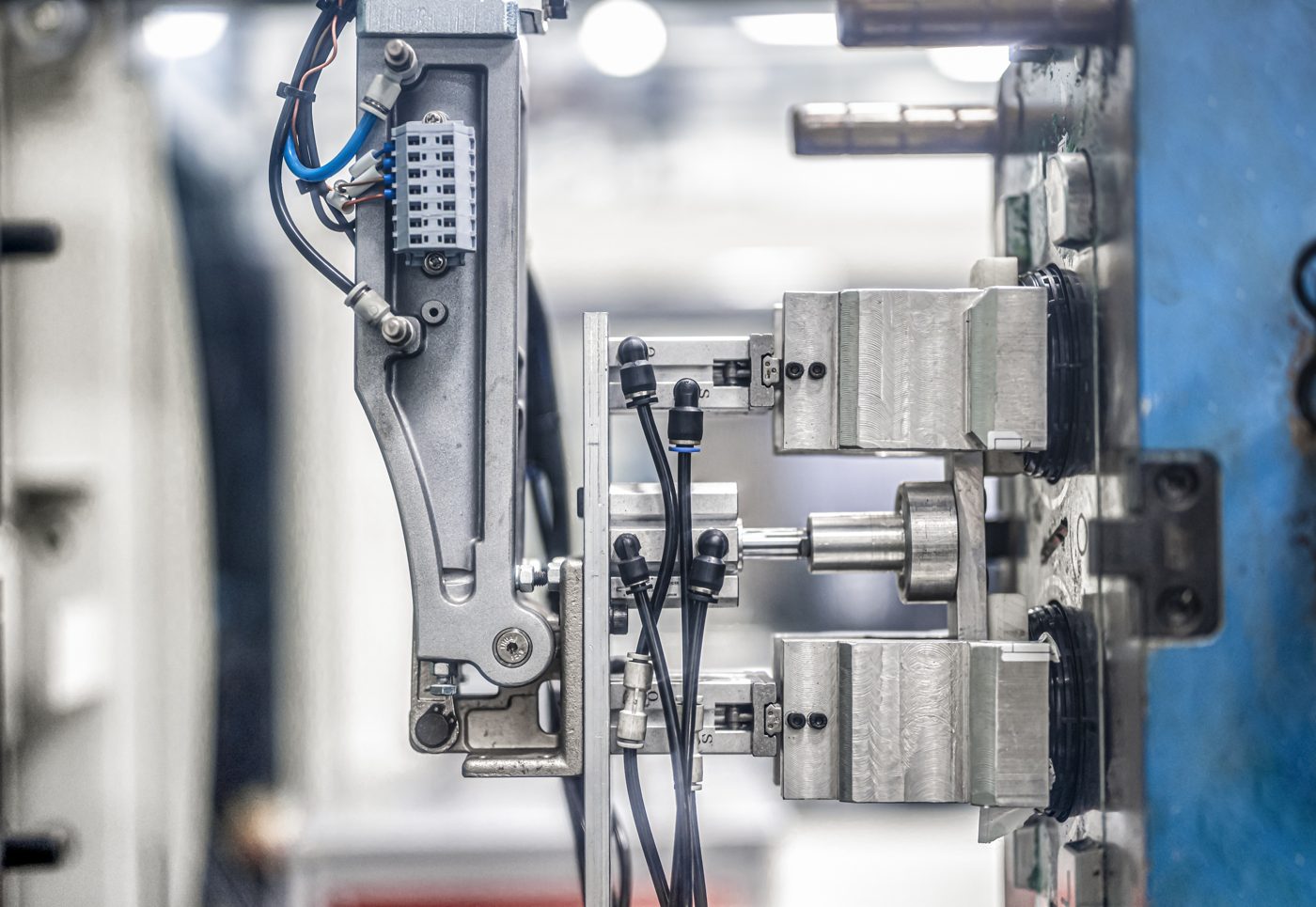
79 molding machines · 50T–1200T · ISO 9001 scope covers this

One number decides your cycle time, your sink marks and your unit cost.

Wall thickness. Almost every injection molding problem that reaches me traces back to it, and almost every fix costs nothing if it happens before the tool is cut — and thousands if it happens after.

The short version
  • Cooling is most of the cycle, and it scales with the square of wall thickness.
  • A thick boss does not need more packing pressure — it needs coring out.
  • Two molding quotes at the same part price can be completely different products. Seven lines decide it.
79injection machines, 50T–1200T
10two-shot machines, 140T–600T
ISO 9001scope covers this work — see below

Why thick sections fail

Plastic shrinks as it cools. A thick section holds heat longer than the wall around it, so it is still shrinking after the surface has frozen — and it drags that surface inward with it. The dimple you see on the show face is material being pulled down by the mass cooling underneath.

Solid boss Cored boss Rib rule sink mark mass cools slowly, pulls the show face in flat, no sink wall stays even, cools at the same rate wall = T ≈0.6T rib thinner than the wall it grows from
The fix is not more packing pressure. It is removing the mass: core out the boss and carry the load on ribs that are thinner than the wall they grow from. Same strength, no sink, shorter cycle. Free if done before the tool is cut.

Cooling is most of the cycle, and it scales with the square of the wall

When you buy injection molding you are buying machine time, and machine time is dominated by cooling. Because cooling time scales roughly with the square of wall thickness, the wall is not a minor styling choice — it is the price.

wall thickness → cooling time → 1.5 mm 2.5 mm 4 mm every extra mm costs you on every shot, forever
The relationship is not linear. This is why a wall reduction agreed in a thirty-minute design review keeps paying back on every single shot for the life of the tool — and why the same change after T1 requires re-cutting steel.

What an injection molding quote actually contains

Two quotes can show the same price per part and be quoting completely different products. These are the lines that decide it — ask for all seven in writing:

LineWhy it changes the price
Tool steel gradeP20, 718H, S136, or an unnamed "equivalent". Determines tool life and whether it can be polished or textured.
Number of cavitiesThe single biggest swing. A 1-cavity tool is cheap and slow; a 4-cavity tool is four times the geometry and a quarter of the cycle per part.
Tool life, in shotsA guaranteed number, not "long life". This is what the steel grade actually buys you.
Cycle time assumedThe unit price is built on it. If the assumed cycle is optimistic, the price is fiction.
Material grade and supplierNot "ABS" — a grade and a maker. Regrind percentage stated, or stated as none.
Texture / finish standardA named standard or a boundary sample. Why this is the line that fails most →
Who owns the toolIn writing, before any money moves. Ownership on paper and the tool being movable in practice are two different things.

The fastest quote is the one that did not ask any questions — and very often the most expensive outcome.

A quote returned in an hour without a single question about your drawing has made assumptions you have not seen.

Read: the $9,400 line item on a mold quote nobody could explain →

The floor

79 injection machines from 50T to 1200T, plus 10 two-shot machines from 140T to 600T. Haitian, Huada, Nissei all-electric, LG, WELLTEC and Zhen Xiong. Mould design runs on UG, Pro/E, CATIA, SolidWorks and Moldflow.
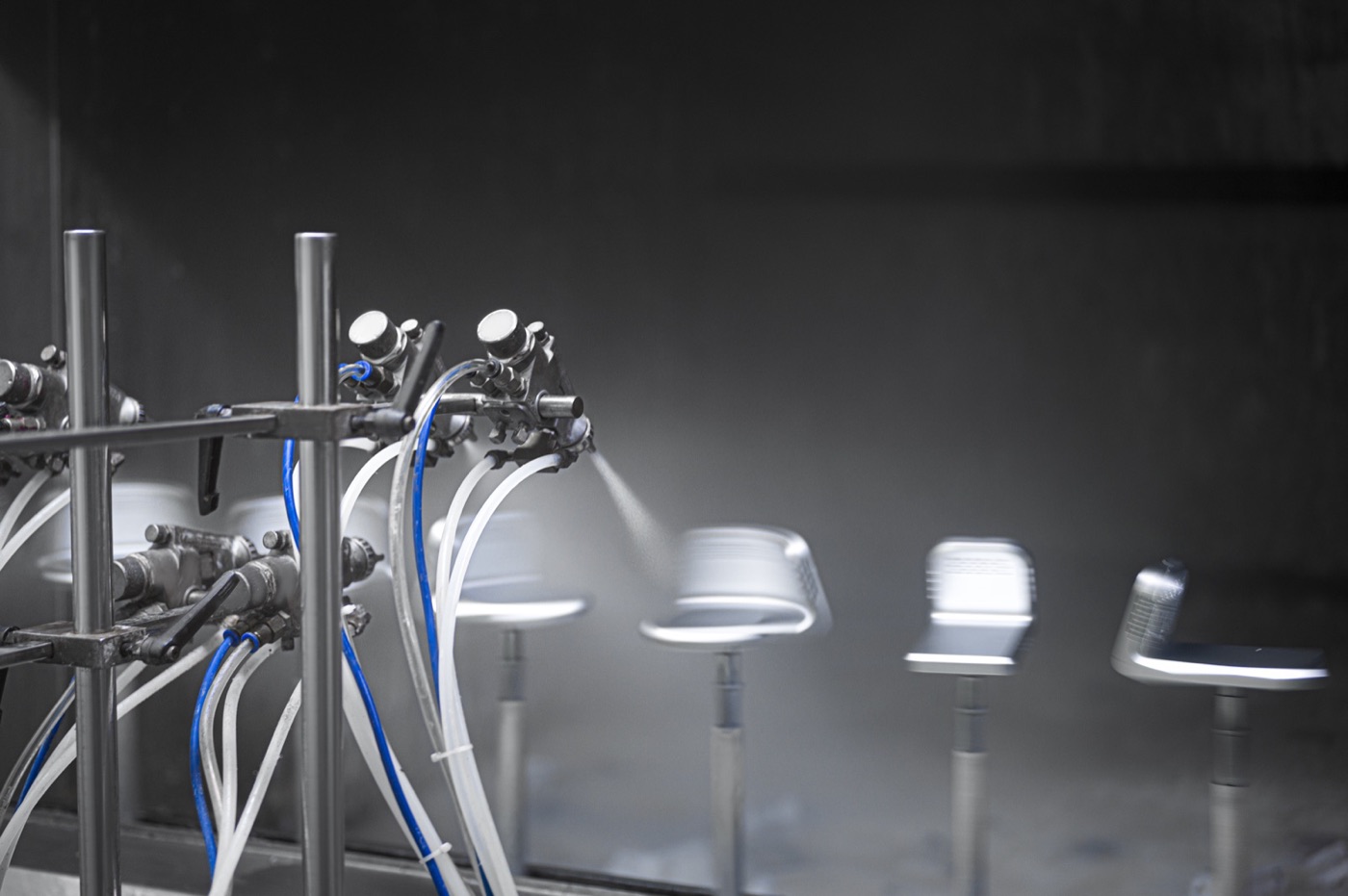

Injection molding shop floor
The molding floor — part of a 32,000 m² site
A mold opening in the machine
Mould opening — where cycle time is actually spent or saved
CMM inspection of a molded part
One of six CMMs, verifying to ≤0.0005 mm

The one page where the certificate actually covers the work

The group holds ISO 9001, ISO 14001 and IATF 16949 — the automotive quality standard. The ISO scope reads "Design and Production of Moulds for Plastic Injection". That is this. It does not cover die casting, which I say on every page that touches casting, because a certificate on a wall means nothing until you have read what it covers.

Full equipment and certification detail →

Where to go from here

You have a part design

Send it before the tool is quoted. You get back the wall sections and features that are driving cost, and what changing them is worth.

DFM review & project rates →

You are already in production

If molding is one line in a BOM with fifty suppliers behind it, the molding is not really the problem.

The managed department →

Deciding between processes

Injection, die casting or machining from solid — the answer is volume arithmetic, not preference.

CNC: when to stop machining →